Showing posts with label perennials. Show all posts

Thursday, April 19, 2012

Green Planters, Green Building and Bamboo

Chrysanthemum planter


My planters at work are pretty much finished. I have finally stuck in caladiums and begonias, the plants that can't take the cold but add lots of color and excitement. My goal is to find perennials that will work well in containers. This saves tons of labor for me and also saves on materials and greenhouse energy costs. My latest fascination is texture and shape. I enjoy the green on green look with a little extra thrown in to grab attention.

This is a planter that I have converted from mostly begonias (which I dearly love) to chrysanthemum, verbenna, and creeping jenny (from tallest to lowest). These are tough, tough plants and only the verbena is the least bit touchy.
Four ivy planter

Here is another tried and true that I love. These four kinds of ivy couldn't be easier now that they are established and look awesome (IMHO).

Yes, I am focused, I want THAT look, but I want it easy and I want it GREEN. And speaking of green, I have been looking at some green building stuff on-line. A reader asked my opinion about bamboo flooring she was considering after I wrote about barter and goods made in China (See Pickle Tasting and Barter blog post). This is a helpful question for me since we are planning on building in the next year or two (God willing).

So here is some of what I found. Bamboo is not a US harvested product that I could tell so it won't be sourced in the USA. It is considered very sustainable since the bamboo plant is really sort of a giant grass and grows in three to five years instead of 30 to 100 years like an oak tree. LEED gives points for bamboo flooring since it is sustainable. However, there are some negative production issues (VOC's I think) associated with the binders that hold the fibers together. Also, you can be pretty sure that, like coffee fair trade issues, if it is pretty cheap, someone isn't getting paid a very fair price for land, labor, or material. There is an added issue, some of the bamboo farming practices are pretty devastating to the environment, part of that turning a quick buck thing. There is at least one flooring company, Teragren, that says they are committed to fair trade for bamboo workers/growers. www.teragren.com

In summary, here is a link explaining the issues associated with bamboo flooring and the different factors to consider when choosing “Green”. You have to decide what is most important to consider and “always let your conscience be your guide” (singing along with Jiminy Cricket and Pinocchio in my head). http://green.findanyfloor.com/WhatIsGreen/Characteristics.xhtml And just to stir the pot a little more, here is a cool product to look at and compare to other options just to get an idea of the kinds of options out there- Marmoleum. http://www.treehugger.com/green-architecture/marmoleum-flooring.html Also if you are considering building or remodeling, the LEED certification guidelines are an awesome educational starting point for Green-architecture and building (LEED stands for Leadership in Energy and Environmental Design). Thanks for the question Gloria!

Some parts of Green are easy- (hanging clothes on my solar dryer). Some parts aren't so easy- deciding if killing more deer would help prevent tick borne diseases or picking out the “best flooring”, or understanding all the LEED guidelines. But being aware, asking questions and intentionally choosing instead of blindly following is a great start. We live on an amazing planet we should do what we can!

Monday, March 19, 2012

Dead Mini Blind-Plant Stake Conversion Kit


Dead mini-blinds

Presently I am in that phase of recycling and re-purposing where discarded items are eyed suspiciously and thoroughly for their hidden purposes. One of those items that came within my reach today was a discarded set of mini blinds.

I have been waiting patiently to find a junker set. It is like an Easter egg hunt. When you least expect it, there will be a set sticking out of someone's trash can. However the elusive discarded blind set didn't appear until today. I think they were thrown away at work and put in some of the cardboard boxes that I brought home. I didn't realize that I had the desired item until today when I glanced into my trashcan and there it was. Tomorrow is my regular trash pick-up day so it was divine intervention. Apparently, when the Husband did a little straightening around outside he put them into the trashcan. He doesn't always recognize the same perceived value in discarded objects that I do. And sometimes he definitely has a point. However, that is not the case here.

Trimmed plant stakes
What he could not know was that these blinds will make this year's plant markers. Plant markers are important to me in my gardening efforts. For many reasons, it is important to be able to identify plants. I want to see which plants are doing well and which ones aren't. When was this perennial planted? There are times when you have to be sure which one is which, they can be hard to tell apart. It is also crucial to know exactly where they are located, you don't want to dig up something by mistake or step on something you didn't see. Last year in an effort to be really frugal with my greenhouse budget I used a partial left over can of spray paint to repaint the printed markers that I had saved from previous purchases. I laid them all flat on newspaper and after shaking up the paint can, proceeded to spray them. Well, tried to. They were so light weight they kept flying off into the dirt. Also, it used up too much paint covering the dark writing and plant pictures.

I've also used cut up two liter bottle strips, but they are very sharp and a little too flexible. They are difficult to push into the potting soil. The plastic in the blinds is just right. It helps to curve the top a little so there aren't sharp corners. If I want to be really frugal I can use a pencil (a kid's big pencil works especially well) instead of a permanent marker. Next spring I can erase the name and reuse the marker. Maybe I will find other mini blinds and build up a permanent collection of labels that I will sort alphabetically. The search is half the fun.

Discarded objects can be re-purposed.  What about people who aren't as useful or attractive, can we see their possibilities and re-directions?  I think we can, if we really want to.

Sunday, February 26, 2012

Winter palette, perennials and subtlety


Heuchera
As a gardener I am ready, ready, ready for springtime, annuals and gardens. But as an art appreciator, I enjoy the subtlety of late winter colors, especially in the perennials, shrubs, and trees that have hung on through the cold. The characteristic colors are mainly divided between early, early reds and later bright yellows and whites. I especially enjoy the interplay of dark reds, browns and grays.

My heucheras haven't done that well. I am afraid that I may have lost several of them. I won't know for a while, but I think the spot is too wet for them. The ones that have survived are showing great late winter, early spring color. Perennials often retain color and put out early growth here where I live and it helps me anticipate March and April and summer to follow.
Nandinas

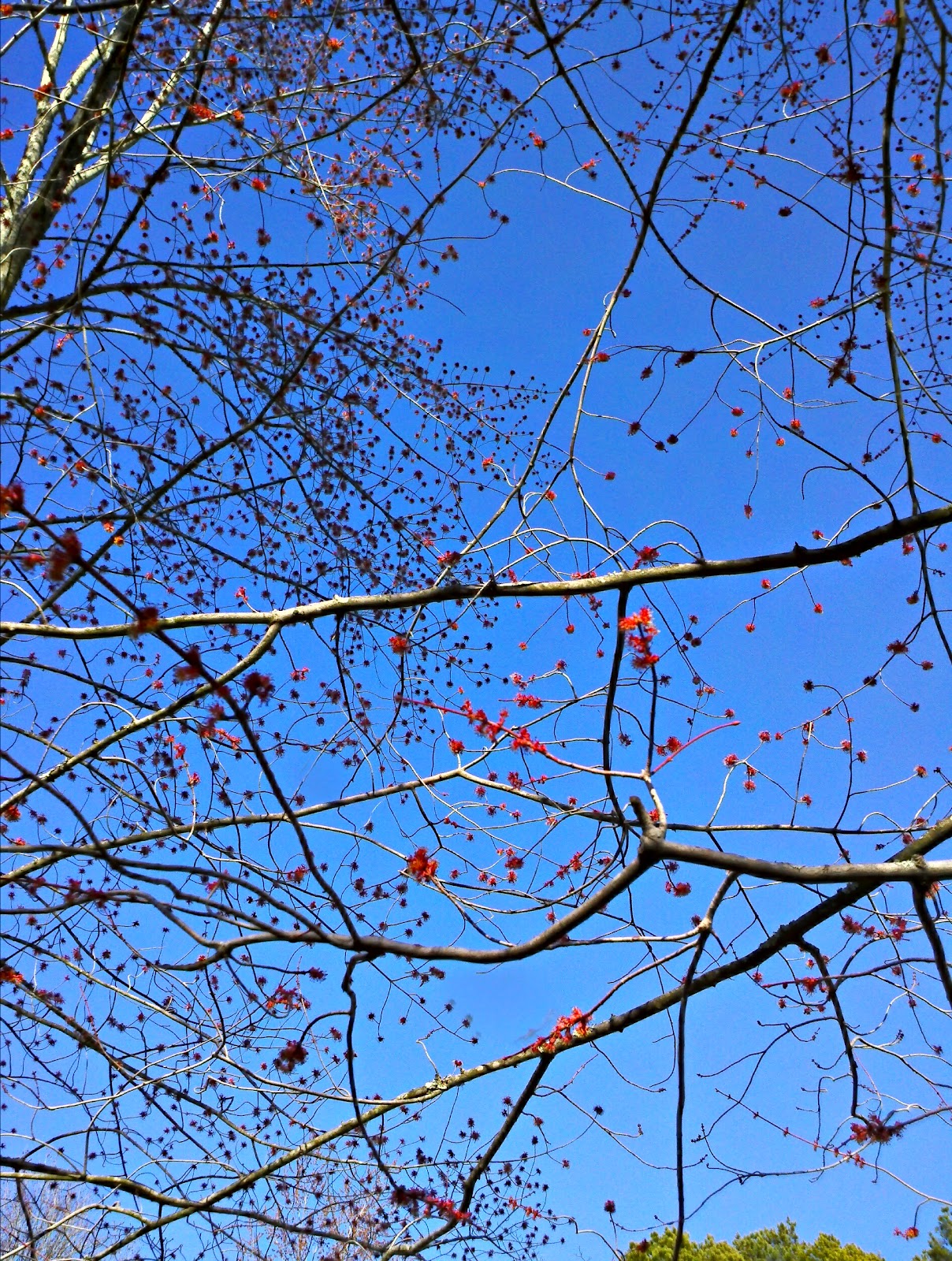
The nandinas also develop an intense dark red before they begin sprouting their new season green growth. A few of these really brighten up a flower bed. And the maples are one of my favorites. I watch for the sap rising in the stems along the lake. One February day I look closely and the twigs and branches are red. I missed it this year, so I was surprised to look up at my workplace and see the trees already flowering.

Subtlety by definition is something easily missed. That is one of the things that makes it so enjoyable. It sneaks up on us, and gives our mind and senses time to engage and be in the moment. A lot of life isn't like that. All kinds of things happen and " smack us up the side of the head".  Subtlety is an invitation to engage our senses and savor life.


.